
Table of Contents
15 Clever Small Space Ideas to Make Every Inch of Your Home Count
Living in a small home does not mean giving up comfort, style, or functionality. Whether you have a compact apartment, a small bedroom, or a home with limited storage, thoughtful design choices can help you make better use of every available inch.
The secret is to look beyond the obvious floor space. Empty walls, unused corners, awkward gaps, and multifunctional furniture can all create opportunities for a more practical home. With the right small space ideas, even a modest room can feel organized, welcoming, and surprisingly spacious.
You do not need a major renovation or expensive furniture to make a difference. Small improvements, such as choosing furniture with hidden storage or using vertical space, can transform the way your home works.
Here are 15 practical small space ideas to help you create a home that feels bigger, looks beautiful, and supports your everyday routine.
Choose Furniture That Serves More Than One Purpose
Multifunctional furniture is one of the smartest ways to make a compact home work harder. Instead of filling a room with separate pieces, choose furniture that performs two or more jobs.
For example, an ottoman with hidden storage can provide seating, a footrest, and a place to keep blankets. A sofa bed can turn a living room into a guest room, while a coffee table with drawers can store magazines, remotes, and everyday essentials.
Before buying anything new, consider how often you will use it and whether it can replace another piece of furniture. These small space ideas help reduce clutter while keeping your home comfortable.
Use Vertical Wall Space for Storage
When floor space is limited, look upwards. Walls offer valuable storage opportunities that are often overlooked.
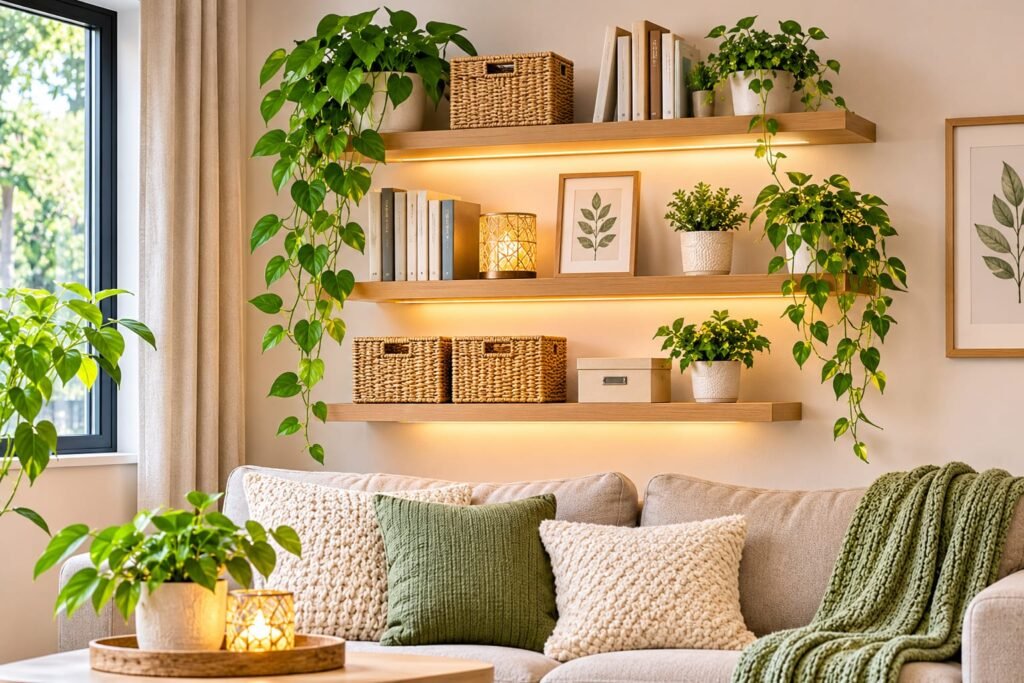
Install floating shelves above a desk, use wall-mounted cabinets in the kitchen, or add narrow shelves beside a doorway. You can also use hooks and rails to organize bags, coats, kitchen utensils, and accessories.
Keep heavier belongings on securely installed shelves and place frequently used items within easy reach. Vertical storage can free up floor space and make a room feel less crowded.
Add a Storage Bed to Your Bedroom
A bedroom can quickly become cluttered when there is not enough space for spare bedding, clothing, and seasonal belongings.
A storage bed with built-in drawers or a lift-up base provides a useful place to keep these items without adding another large cabinet. If replacing your bed is not practical, use low-profile storage containers underneath it.
Choose containers that fit the available clearance and protect fabrics from dust. For more inspiration, explore our guide to “under-bed storage ideas”
This is one of the most practical small space ideas for bedrooms where wardrobe and cupboard space is limited.
Create a Compact Home Office
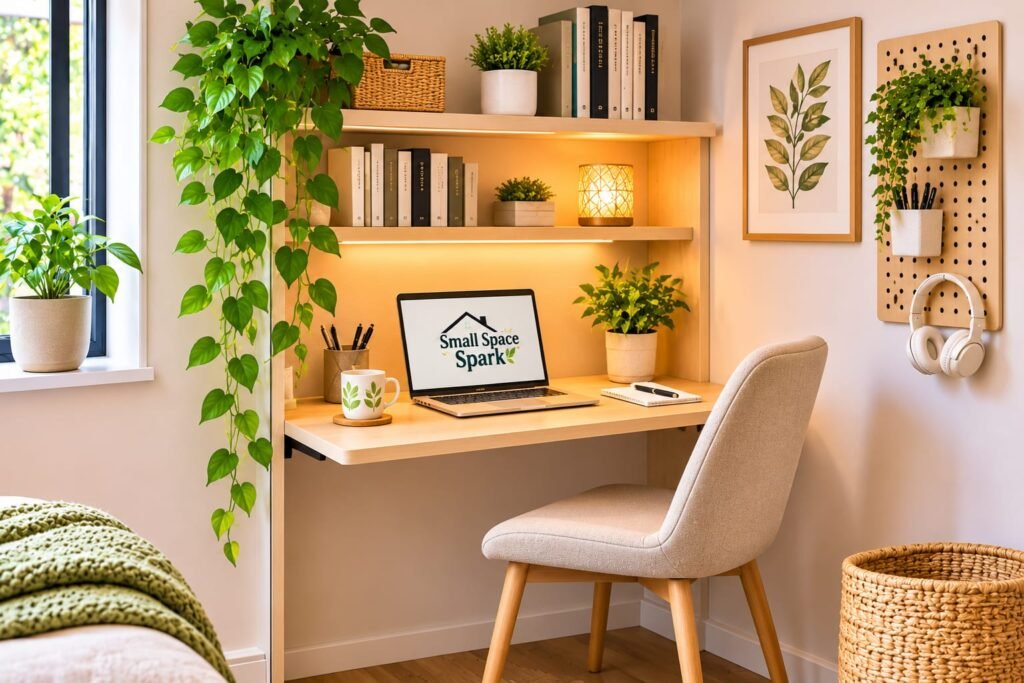
You do not need a separate room to create a useful workspace. A quiet corner, a small desk, and a comfortable chair can be enough for everyday tasks.
Consider a wall-mounted folding desk if you rarely need a permanent workstation. When work is finished, fold it away to make more room. A narrow desk can also fit beside a window or in an unused corner.
Use a small organizer for stationery, keep cables tidy, and add a task light. A well-planned workspace should support good posture and provide enough room for your computer and essential supplies.
Choose Sliding Doors Instead of Swinging Doors
Traditional doors need clearance to open, which can make tight rooms feel even more restricted.
Where the layout and construction allow, consider sliding doors for wardrobes, cupboards, or room divisions. They move along a track rather than swinging into the room, leaving more usable space around furniture.
For a bedroom wardrobe, sliding doors can make it easier to position a bedside table or other furniture nearby. Make sure the track is suitable for the door’s weight and is installed securely.
Use Mirrors to Make Rooms Feel Brighter
Mirrors can make a small room feel more open by reflecting natural and artificial light. A large mirror placed opposite or near a window can help distribute daylight throughout the space.
You can also use mirrored wardrobe doors or a full-length mirror in a narrow hallway. Choose a frame that complements your existing decor so the mirror feels like part of the design.
Avoid placing mirrors where they reflect cluttered areas. A thoughtful position can make a room feel brighter and more balanced.
Make Use of Awkward Corners
Corners often become wasted spaces because standard furniture does not fit comfortably into them.
A slim corner shelf, compact reading chair, or small corner desk can turn an unused area into something useful. In the kitchen, corner organizers can make cupboard contents easier to reach. In the living room, a tall plant stand can add character without taking up much floor space.
Measure carefully before buying furniture, especially in narrow corners. These small space ideas can help turn overlooked areas into useful parts of your home.
Install Floating Nightstands
Traditional bedside tables can take up more floor space than a compact bedroom can spare.
A floating nightstand attached to the wall provides a convenient surface for a lamp, phone, book, or glass of water while keeping the floor underneath clear.
Choose a design with a small drawer if you need hidden storage. Before installation, check the wall type and use appropriate fixings to support the weight safely.
Organize Kitchen Cabinets with Vertical Dividers
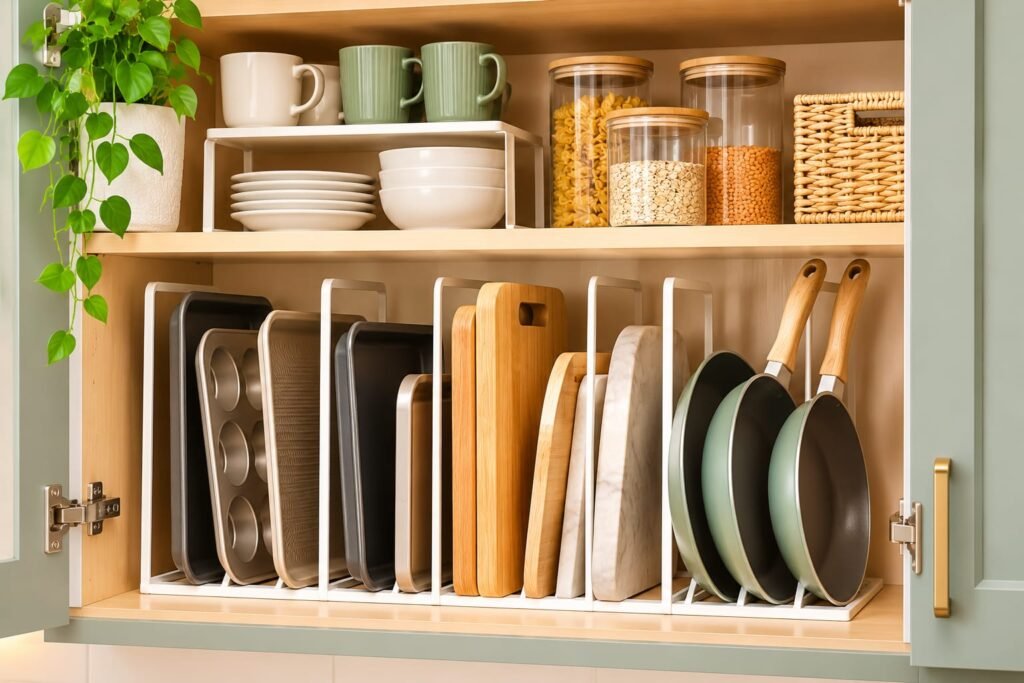
Kitchen cabinets can become difficult to use when baking trays, chopping boards, and pans are piled on top of one another.
Vertical dividers allow you to store flat items upright, making each one easier to remove. Shelf risers can create an additional level for cups, plates, or pantry essentials.
Use organizers that fit the cabinet dimensions and avoid overcrowding shelves.
For more kitchen storage inspiration, see our guide to 10 Kitchen Items You Should Never Stack
Practical small space ideas like these can make everyday cooking easier without requiring a larger kitchen.
Choose Light and Consistent Colours
Colour can influence how spacious a room feels. Light shades such as warm white, soft beige, pale grey, and muted green can help create an airy atmosphere.
You do not have to make every surface white. Instead, choose a simple palette and repeat a few colours throughout the room. Similar tones on walls, curtains, and larger furniture can create a more connected appearance.
Add personality through cushions, artwork, plants, and smaller decorative pieces. A consistent colour scheme can make a compact home feel calmer without looking plain.
Use Furniture with Exposed Legs
Large furniture pieces that sit directly on the floor can make a small room feel visually heavy.
Sofas, armchairs, and cabinets with raised legs allow more of the floor to remain visible. This can create a lighter appearance and make cleaning underneath furniture easier.
Choose pieces that are appropriately sized for your room. Exposed legs are a useful design detail, but furniture should still provide the comfort and support you need.
Create a Small Entryway Storage Station
A cluttered entrance can make the entire home feel disorganized. Even a narrow hallway can benefit from a simple storage arrangement.
Use wall hooks for coats and bags, a slim shoe cabinet for footwear, and a small tray for keys. If there is room, add a narrow shelf or mirror above the storage area.
Keep only everyday essentials near the entrance. Seasonal shoes and rarely used accessories can be stored elsewhere.
Among the most useful small space ideas, this one helps make leaving and returning home easier.
Use Curtains to Divide a Room
If your home has an open-plan layout, curtains can create separate zones without building permanent walls.
A ceiling-mounted curtain can divide a sleeping area from a living space or provide privacy around a small home office. Choose a lightweight fabric that suits the room and allows enough light to pass through when desired.
Curtains are flexible, easy to open, and can be changed when your needs or decor style change. Make sure the rail is securely fixed and does not obstruct doors or walkways.
Keep Decorative Accessories Simple
Too many decorative objects can make a compact room feel busy. Instead of displaying everything at once, choose a few pieces that add personality without overwhelming the space.
A statement lamp, a small collection of framed prints, or a carefully arranged group of plants can create visual interest. Use trays to group smaller accessories and keep surfaces from looking scattered.
Rotate seasonal decorations rather than adding more items permanently. A balanced display helps your home feel personal and organized.
Use Hidden Storage to Reduce Visual Clutter
Visible clutter can make even a well-designed room feel smaller. Hidden storage helps keep everyday belongings accessible without leaving everything on display.
Look for benches with storage compartments, coffee tables with drawers, closed shelving, and baskets that fit neatly under furniture. Store items according to how often you use them so everyday essentials remain easy to reach.
These small space ideas work especially well when you combine open display areas with closed storage. Show a few favourite objects and keep less attractive everyday items out of sight.
How to Make a Small Home Feel More Spacious
Good design is not only about buying clever furniture. It is also about creating a layout that makes everyday movement easy.
Keep walkways clear, avoid blocking windows, and leave enough space to open drawers and cupboard doors. Measure furniture before purchasing it so you do not end up with pieces that make a room difficult to use.
It is also helpful to review your belongings regularly. Donate or recycle items you no longer need, and give the things you keep a specific storage place.
For more practical inspiration, explore “IKEA’s storage ideas to maximize a small space including ways to use vertical storage, combination shelving, and hidden organizers.
Final Thoughts
A small home can still be stylish, comfortable, and highly functional. You simply need to use the available space more thoughtfully.
Start with one area that feels difficult to manage, such as your bedroom, kitchen, or entryway. Try one or two of these small space ideas, see how they improve your routine, and make additional changes when needed.
The best home is not necessarily the biggest one. It is the space that works well for the people who live in it, keeps everyday essentials within reach, and feels welcoming at the end of a busy day.