
Table of Contents
10 Kitchen Items You Should Never Stack: Smart Storage Ideas
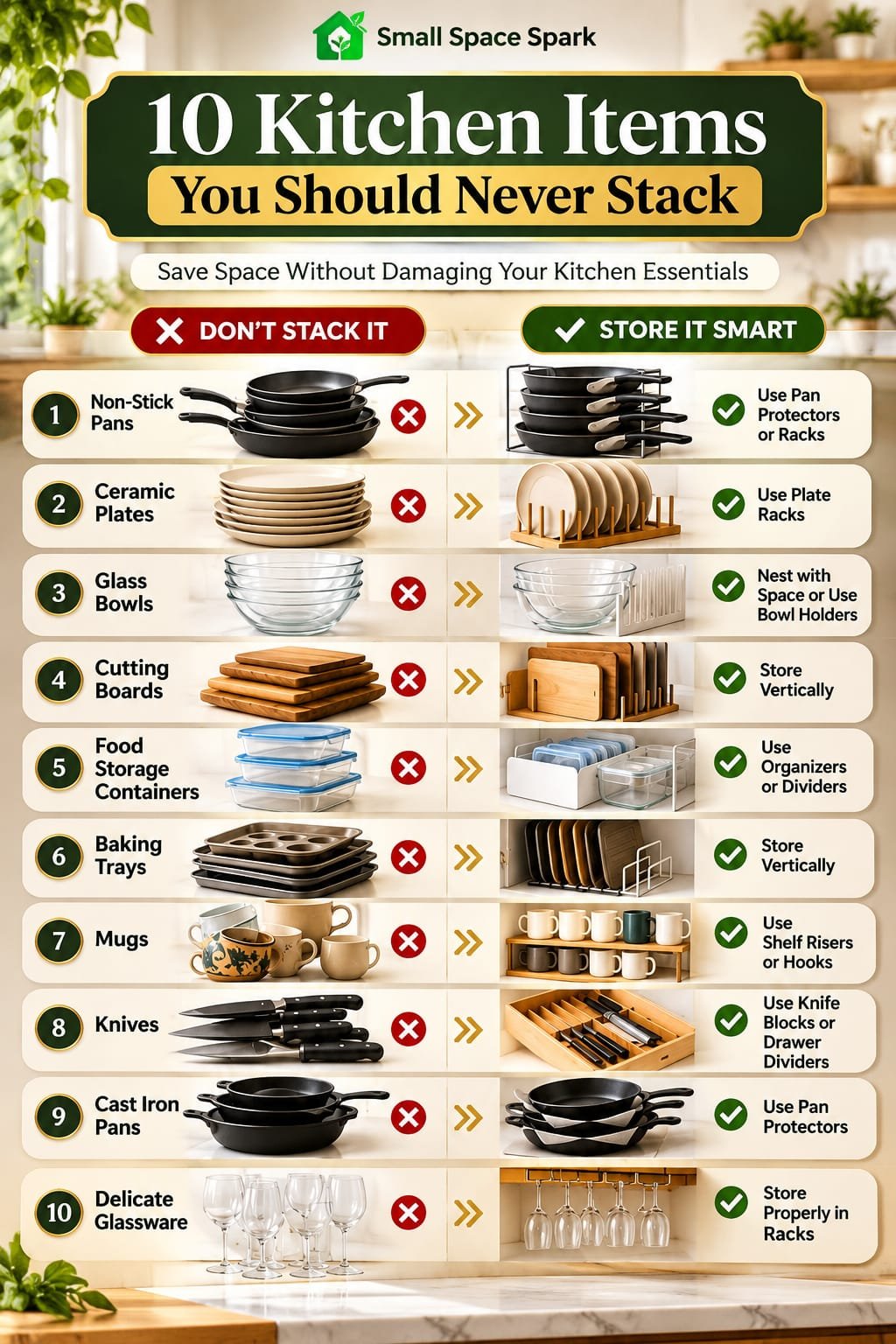
Stacking kitchen essentials may seem like the easiest way to save cabinet space, especially in a small home. However, the wrong storage method can scratch cookware, chip dishes, damage delicate glassware, and make everyday cooking more frustrating.
The solution is not to stop stacking everything. Many items can be nested or stacked safely when they are designed for it. The key is knowing which kitchen items you should never stack carelessly and choosing a better way to store them.
From non-stick pans to sharp knives, these ten examples will help you protect your kitchen essentials, reduce clutter, and make better use of your available space.
Remember, kitchen items you should never stack require suitable organizers, enough space, and careful handling.
If you are looking for more ways to make the most of limited space, explore our guide to smart storage ideas for small apartments.
Non-Stick Pans
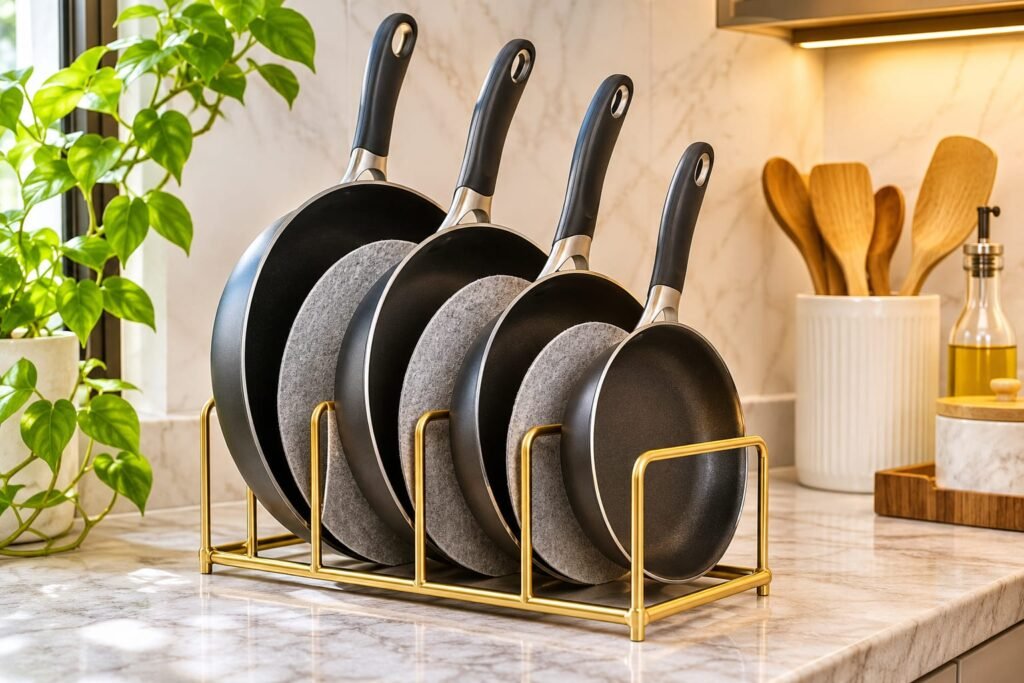
Non-stick pans make everyday cooking easier, but their coatings can be scratched when another pan sits directly on top. Repeated contact with hard surfaces may shorten the life of the coating.
If you have limited cabinet space, you do not necessarily need to store every pan separately. You simply need to prevent the cooking surfaces from rubbing against one another.
Smarter storage ideas:
- Place a pan protector, soft cloth, or suitable liner between pans.
- Use a vertical pan rack to separate cookware.
- Keep frequently used pans within easy reach.
- Avoid sliding pans across one another when removing them.
These simple precautions help protect your cookware without requiring a complete kitchen makeover.
For additional care guidance, see “Calphalon’s official cookware use-and-care instructions” (https://www.calphalon.com/use-and-care.html).
These kitchen items you should never stack need protective storage to prevent scratches and coating damage.
Ceramic Plates
Ceramic plates can chip, scratch, or crack when they knock against one another. Tall, heavy stacks can also be awkward to lift, especially from a high cabinet shelf.
Although some everyday plates are designed to stack, delicate, decorative, or irregularly shaped dishes may need extra protection.
Smarter storage ideas:
- Use a plate rack to keep dishes separated.
- Add suitable plate separators for delicate pieces.
- Keep heavy plates on sturdy, lower shelves.
- Avoid creating stacks that are difficult to lift safely.
A compact plate organizer can make it easier to reach individual dishes without disturbing the entire pile.
Kitchen items you should never stack carelessly include delicate ceramic plates that can chip easily.
Glass Bowls
Glass bowls can often nest inside one another, but forcing bowls together or stacking them too tightly may cause chips, scratches, or breakage. This is particularly important when bowls have different shapes or sizes.
The goal is to keep bowls stable while making sure they can be removed easily.
Smarter storage ideas:
- Nest only bowls that fit comfortably.
- Place protective liners between delicate glass pieces.
- Use a bowl organizer or divided cabinet shelf.
- Never force a smaller bowl into a larger one if it becomes stuck.
For small kitchens, a dedicated bowl section prevents loose glassware from taking over an entire cabinet.
Knowing which kitchen items you should never stack helps prevent accidental damage to fragile glass bowls.
Wooden Cutting Boards
Wooden cutting boards need more attention than simply placing them in a cupboard. Storing them while damp or leaving them in a poorly ventilated pile can trap moisture and contribute to warping or other damage.
Different board sizes can also become difficult to access when stacked together.
Smarter storage ideas:
- Clean boards according to their care instructions.
- Let them dry thoroughly before storing.
- Use a vertical divider to separate boards.
- Keep them away from persistently damp areas.
Vertical storage makes each board easier to grab and helps prevent a pile of boards from sliding around whenever you need one.
These kitchen items you should never stack while damp because trapped moisture can cause damage.
Food Storage Containers and Lids
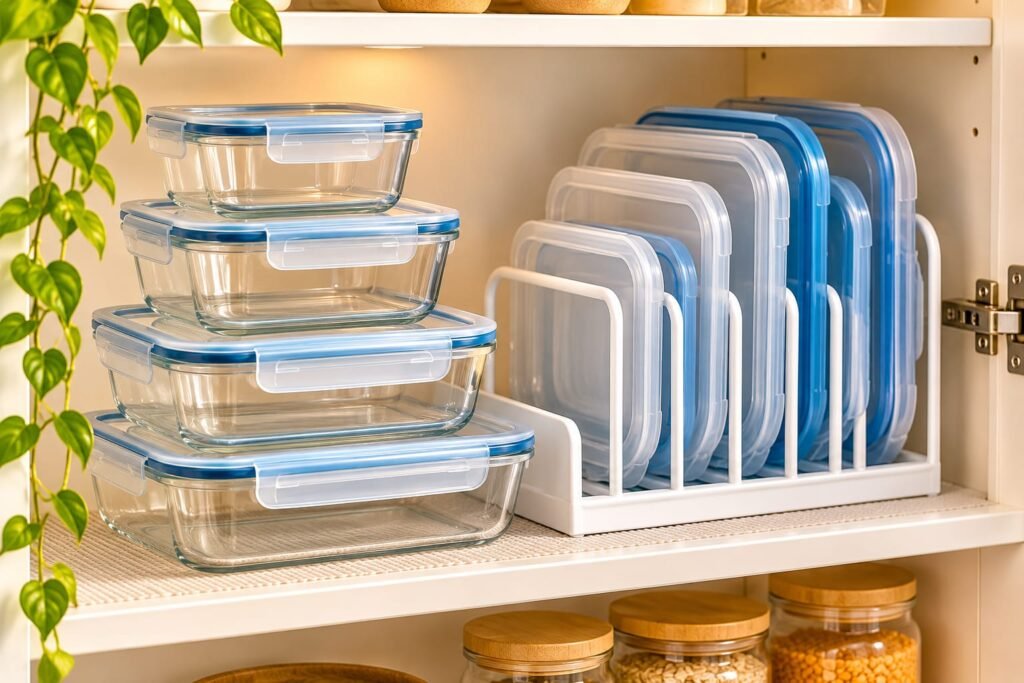
Food containers are useful for leftovers, meal preparation, and pantry organization. The problem starts when containers of different sizes are mixed together and lids become scattered throughout the cabinet.
This creates clutter and wastes time when you are trying to find a matching lid.
Smarter storage ideas:
- Nest compatible containers by size.
- Store lids vertically in a separate divider.
- Keep matching sets together where practical.
- Use adjustable organizers to make better use of drawer space.
Containers can usually be nested when they fit properly. The important part is keeping lids organized and avoiding tight arrangements that are difficult to separate.
Kitchen items you should never stack without checking whether their shapes and sizes fit safely.
Baking Trays and Muffin Tins
Baking sheets, roasting trays, and muffin tins often end up in one large horizontal stack. Each time you need the bottom tray, you may have to remove several others.
Repeated sliding can scratch finishes, while an unstable pile can be inconvenient to handle.
Smarter storage ideas:
- Store trays vertically in a sturdy organizer.
- Separate coated trays with suitable protective liners.
- Group baking sheets, roasting pans, and muffin tins by type.
- Keep frequently used bakeware in an accessible cabinet.
A vertical rack can turn a narrow cabinet section into practical storage without adding more shelves.
Some kitchen items you should never stack horizontally when a vertical organizer offers safer access.
Mugs and Delicate Cups
Some mugs are designed to stack, but many are not. Placing one mug on another can put pressure on handles and rims, especially when the shapes do not fit together securely.
Delicate cups and decorative mugs deserve particular care.
Smarter storage ideas:
- Store most mugs upright on a stable shelf.
- Use shelf risers to create an additional storage level.
- Install suitable mug hooks if your shelf supports them.
- Keep fragile cups separate from heavy everyday mugs.
Shelf risers are a useful option for small kitchens because they make use of unused vertical space while keeping mugs easy to reach.
Kitchen items you should never stack include delicate cups with handles that can break under pressure.
Kitchen Knives
Kitchen knives should not be thrown loosely into a drawer or piled together with other utensils. Their edges can become damaged, and reaching into a cluttered drawer increases the risk of accidental cuts.
Safe storage is more important than saving a few inches of drawer space.
Smarter storage ideas:
- Use a suitable knife block.
- Choose a drawer insert designed to hold knives securely.
- Consider a securely installed magnetic knife holder if appropriate for your kitchen.
- Keep blades protected and away from loose utensils.
A dedicated knife organizer keeps sharp tools in a predictable place and helps make everyday food preparation safer.
Sharp kitchen items you should never stack loosely with other utensils inside a crowded drawer.
Cast Iron Pans
Cast iron cookware is durable, but it is also heavy. Stacking cast iron pans directly against delicate cookware may cause scratches or damage, while damp storage can encourage rust.
These pans also need a strong, stable shelf that can support their weight.
Smarter storage ideas:
- Place a suitable protector between pans.
- Make sure cookware is clean and dry before storage.
- Use a sturdy, weight-appropriate rack or shelf.
- Store heavy pans on lower shelves whenever possible.
If you store cast iron alongside non-stick cookware, keep the heavier pans from pressing against delicate cooking surfaces.
Heavy kitchen items you should never stack directly against delicate cookware or fragile surfaces.
Delicate Glassware
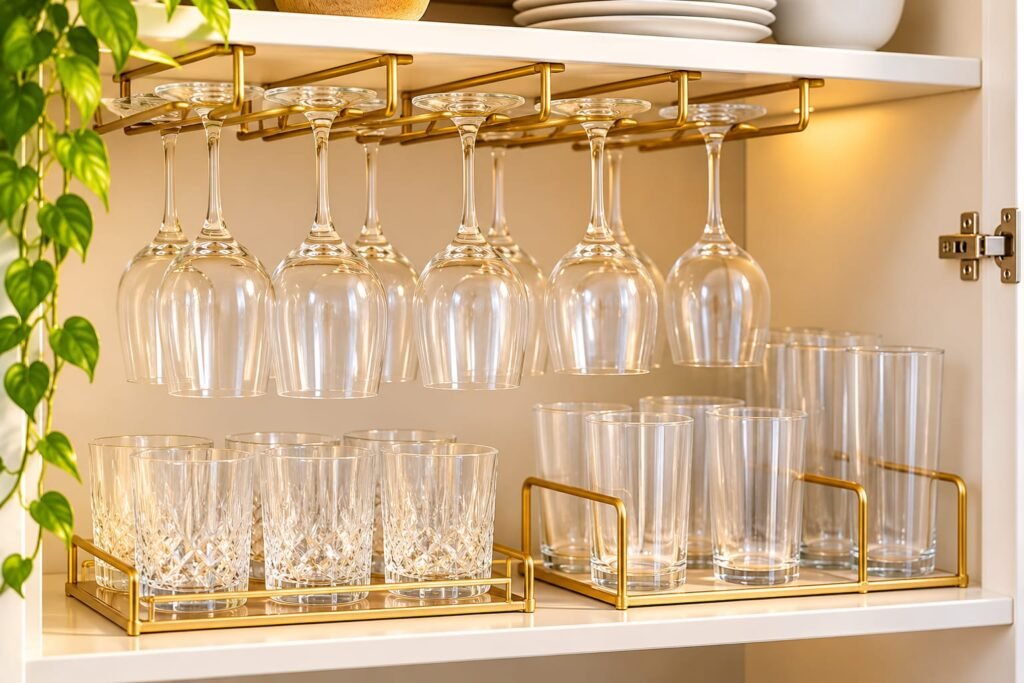
Wine glasses, crystal glasses, and other delicate glassware can break when their rims knock against one another or when they are stored in crowded cabinets.
Their stems and thin edges need particular care. Stacking glasses that are not designed to nest can put unnecessary pressure on fragile parts.
Smarter storage ideas:
- Keep delicate glasses separated.
- Use a glassware rack with suitable spaces for each piece.
- Avoid overcrowding shelves.
- Consider an under-shelf hanging rack only if it is securely fitted and suitable for the glassware.
A dedicated glassware area makes it easier to reach each glass without moving several others first.
Smart Kitchen Storage Ideas for Small Spaces
Knowing which kitchen items you should never stack carelessly is only part of the solution. The right arrangement can also help you create a kitchen that feels more spacious and works better every day.
Make Use of Vertical Space
Use plate racks, tray dividers, shelf risers, and suitable cabinet organizers to make use of empty vertical space. Measure your shelves before buying anything so the organizer fits properly.
Keep Everyday Items Accessible
Store the cookware, plates, and mugs you use most often in easy-to-reach places. Less frequently used items can go on higher shelves, provided they remain safe to lift down.
Organize Drawers by Purpose
Give knives, lids, food containers, and utensils their own designated sections. Dividers make it easier to return items to the correct place instead of creating another mixed pile.
Avoid Overcrowding Cabinets
A cabinet packed to the limit is harder to maintain. Leave enough room to remove items comfortably, and avoid placing heavy cookware where it could fall or damage delicate pieces.
Measure Before Buying Organizers
Measure the cabinet width, depth, and available height before choosing racks or dividers. A well-fitted organizer should improve access without blocking doors or creating awkward gaps.
Common Kitchen Storage Mistakes to Avoid
Even attractive kitchen cabinets can become difficult to use when basic storage habits are overlooked.
- Stacking everything the same way: Different materials and shapes need different storage methods.
- Ignoring weight: Heavy cookware should sit on sturdy shelves, not on delicate dishes.
- Putting items away damp: Moisture can damage wooden items and contribute to rust on some metals.
- Forcing tightly nested items apart: If pieces stick together, choose a more suitable arrangement.
- Buying organizers without measuring: An organizer that does not fit properly can create more clutter.
- Ignoring manufacturer instructions: Storage and care recommendations can vary by material and product.
A few thoughtful adjustments can protect your belongings and make everyday kitchen tasks less stressful.
Delicate kitchen items you should never stack unless the glassware is specifically designed for nesting.
Final Thoughts
A well-organized kitchen is not simply about fitting more items into your cabinets. It is about keeping your essentials protected, accessible, and ready to use.
Understanding which kitchen items you should never stack carelessly can help you prevent avoidable damage while making better use of limited space. Pan protectors, plate racks, vertical dividers, and dedicated knife storage are practical ways to improve organization without a costly renovation.
Start with one crowded cabinet or drawer. Separate delicate items, protect cookware, and give everything a suitable place. Small improvements can make your kitchen feel cleaner, safer, and easier to use.