

Table of Contents
15 Budget-Friendly Home Decor Ideas to Transform Your Home
You don’t need an expensive makeover to make your home feel beautiful, comfortable, and inviting. With a little creativity, you can refresh your rooms using affordable accessories, simple DIY projects, and items you already own.
These budget-friendly home decor ideas will help you add personality, warmth, and style without overspending. Whether you live in a small apartment or a family home, these simple changes can make your space feel more thoughtfully designed.
If you love a warm and inviting home, explore our guide to 17 Cozy Home Decor Ideas to Make Any Space Feel Warm and Inviting for more inspiration.
Rearrange Furniture for a Fresh Look
One of the easiest ways to refresh a room is to rearrange the furniture you already have. Try moving your sofa away from the wall, changing the direction of your chairs, or creating a more welcoming conversation area.
Before moving anything, consider how people walk through the room. Keep pathways clear and avoid blocking windows or natural light.
Budget tip: Sketch a simple room layout before moving heavy furniture. You can experiment with different arrangements without spending anything.
These budget-friendly home decor ideas work best when you build around furniture you already own.
Refresh Your Space with Throw Pillows
Throw pillows can quickly change the appearance of a sofa, bed, or reading chair. Instead of buying a completely new set, mix a few pillows you already own with one or two affordable covers.
Choose colors that complement your existing furniture. Cream, sage green, beige, and muted terracotta work well in many warm, modern interiors.
Budget tip: Pillow covers are often more affordable than buying complete pillows. Store seasonal covers and switch them when you want a different look.
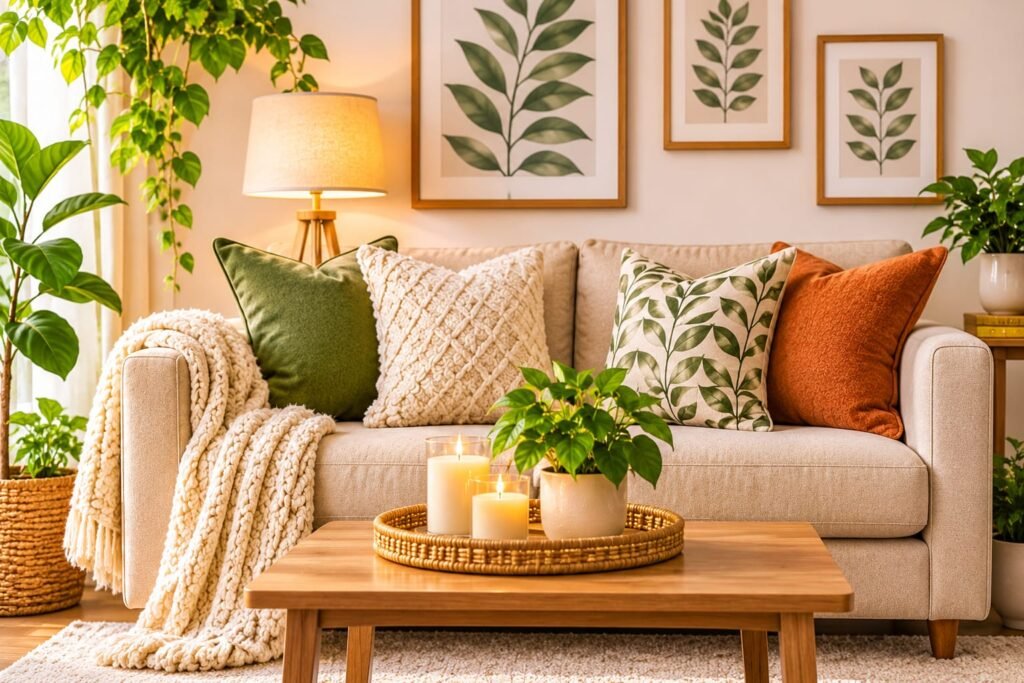
Create Your Own Wall Art
Blank walls can make a room feel unfinished, but decorating them doesn’t require expensive artwork. You can create simple prints, frame meaningful photographs, or make abstract art using inexpensive supplies.
For a coordinated appearance, choose two or three colors that already appear in your room. Arrange your artwork in a small gallery wall or display one larger piece above a sofa.
Budget tip: Use affordable frames in similar finishes to make different prints look like a matching collection.
Add Greenery with Affordable Plants
Plants introduce natural color and texture into a room. Place a small plant on a shelf, group a few pots on a windowsill, or use a larger plant to fill an empty corner.
If you’re new to plant care, start with varieties suited to your home’s available light and your ability to water them regularly. You can also use a few realistic artificial plants in areas where living plants may struggle.
Budget tip: Propagate suitable plants from existing cuttings when possible, or choose small plants that can grow over time.
Adding greenery is one of the simplest budget-friendly home decor ideas for bringing color and texture into a room.
Upgrade Your Lighting with Warm Bulbs
Lighting affects how comfortable and inviting a room feels. A simple change from harsh, cool lighting to warm-toned bulbs can create a softer atmosphere, particularly in bedrooms and living rooms.
You can also use an existing table lamp, floor lamp, or wall light to create different layers of lighting. Keep bright task lighting where you read, cook, or work.
Budget tip: Start by replacing only the bulbs in the room you use most often. Check the fixture’s recommended bulb type and brightness before buying replacements.
For more guidance on efficient home lighting, explore the U.S. Department of Energy’s lighting and daylighting tips.
Decorate with Thrifted and Secondhand Finds
Secondhand shops, local markets, and online resale groups can be excellent places to find decorative pieces at lower prices. Look for mirrors, picture frames, ceramic vases, small tables, baskets, and interesting bookends.
Choose items based on their condition and how well they fit your existing style rather than buying something simply because it is inexpensive.
Budget tip: Set a spending limit before browsing. A few useful, attractive pieces can have more impact than a collection of unrelated purchases.
Use Mirrors to Brighten a Room
A well-placed mirror can reflect daylight and make a room feel more open. Try placing one opposite or beside a window where it reflects light into a darker area.
Mirrors can also add visual interest to an entryway, bedroom, or living room. Choose a frame that complements your furniture and other finishes.
Budget tip: Look for a simple secondhand mirror and improve its frame with a suitable finish if needed. Always secure heavy mirrors safely to the wall.
Mirrors are versatile budget-friendly home decor ideas because they can make a room feel brighter and more open.
Style Open Shelves with Items You Already Own
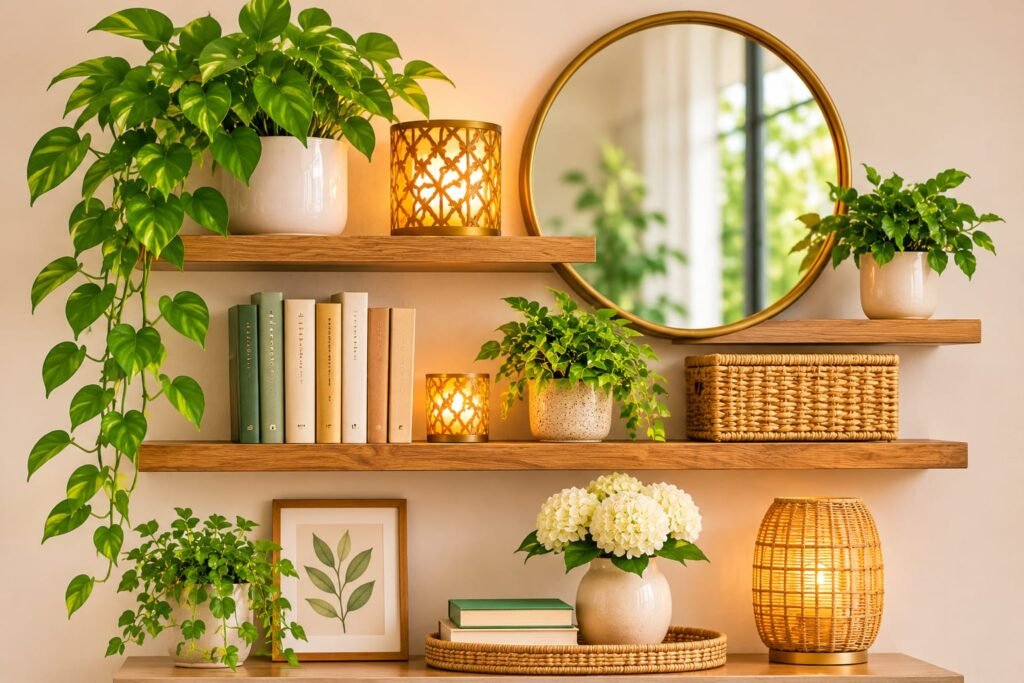
Open shelves can look polished without expensive decorative accessories. Combine books, small plants, framed photographs, baskets, and a few meaningful objects.
Vary the heights of the items and leave some empty space so the shelves don’t feel crowded. Group similar colors together for a more cohesive look.
Budget tip: Shop your own home before buying new decor. Move a vase, framed picture, or stack of books from another room to create a fresh display.
Change the Look of a Room with Curtains
Curtains influence the overall appearance of a room by adding softness, color, and texture. If your current curtains are worn or too dark for the space, consider a lighter, neutral option that works with your existing decor.
Hang curtains neatly and, where practical, position the rod high enough to make the windows feel taller. Make sure the fabric length and width suit the window.
Budget tip: Check ready-made curtains and discount home stores before considering custom options. Measure your windows carefully to avoid costly mistakes.
Add Texture with Rugs and Throws
A rug or throw can make a plain room feel warmer and more layered. A textured blanket over a sofa, a small rug beside the bed, or a washable runner in an entryway can add comfort without changing the furniture.
Choose patterns and colors that work with the rest of the room. In smaller spaces, a rug that is too small can make the furniture arrangement feel disconnected.
Budget tip: Prioritize the area where a rug or throw will make the biggest difference. You don’t need to cover every floor or sofa with new textiles.
Layering textiles is one of the easiest budget-friendly home decor ideas for making a room feel warmer.
Give Old Furniture a Simple Makeover
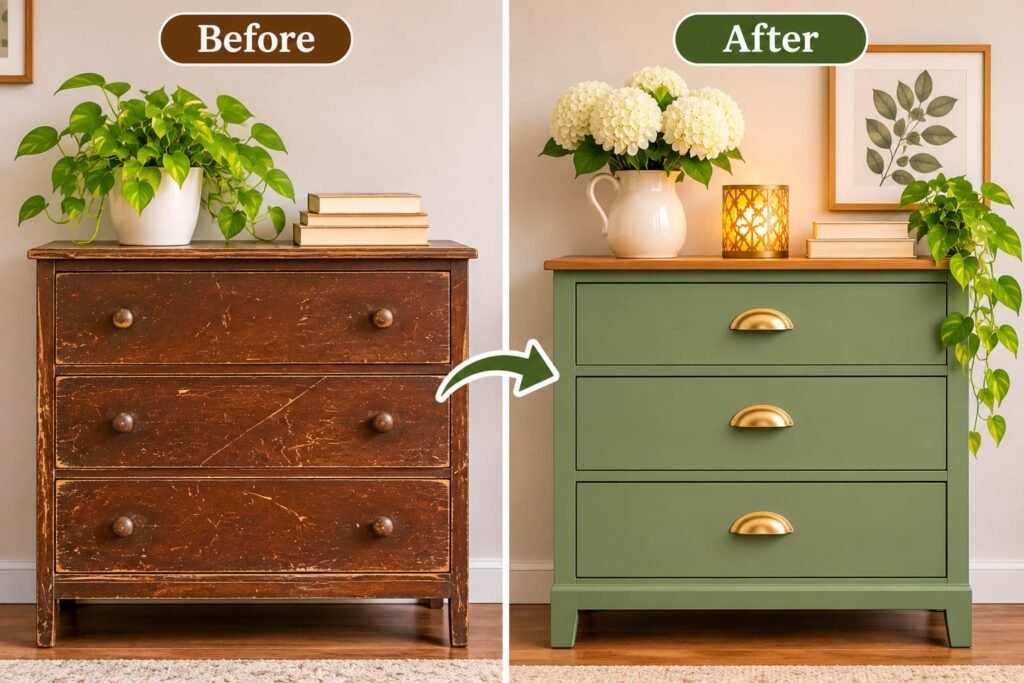
Before replacing a scratched side table or tired-looking dresser, consider whether it can be refreshed. Cleaning, tightening loose hardware, changing suitable knobs, or refinishing a surface may improve its appearance.
For painted furniture, prepare the surface and choose a product appropriate for the material. Follow the manufacturer’s safety instructions, including ventilation and drying times.
Budget tip: Start with one small piece rather than attempting to makeover every item at once. This helps you control costs and learn which techniques work best.
Display Books as Decorative Accents
Books can add color, height, and personality to coffee tables, shelves, and bedside tables. Stack a few books horizontally, place a small decorative object on top, or arrange books vertically between bookends.
Choose books you enjoy or want to keep accessible. Avoid stacking too many on delicate furniture or in places where they could fall.
Budget tip: Use books you already own rather than buying decorative books solely for display.
Make a Simple DIY Centerpiece
A centerpiece can make a dining table or coffee table feel more intentional. Try arranging a tray with a small vase, a plant, a candle, or a favorite decorative object.
Keep the arrangement low enough for comfortable conversation on dining tables. On coffee tables, leave enough clear space for drinks, books, and everyday use.
Budget tip: Use a tray you already have and rotate its contents with the seasons. A simple arrangement often looks better than a crowded collection.
Refresh Small Details Like Knobs and Handles
Small hardware changes can give cabinets, drawers, and furniture a different appearance. Depending on the item, replacing dated knobs or handles with a simple coordinated style may create a noticeable improvement.
Before purchasing replacements, measure the existing hardware and check the spacing of screw holes. This helps prevent buying pieces that don’t fit.
Budget tip: Update one visible piece of furniture first. If you like the result, you can decide whether the same finish would work elsewhere.
Declutter and Create a Coordinated Color Palette
Sometimes a room needs less decor, not more. Removing unused items, clearing crowded surfaces, and grouping accessories can make your existing furniture and favorite pieces stand out.
Choose two or three main colors and repeat them through pillows, artwork, plants, and small accessories. You don’t have to make everything match exactly; a little variation keeps the room interesting.
Budget tip: Before buying anything, spend time editing your current decor. Keep what you love, relocate useful pieces, and donate or responsibly dispose of items you no longer need.
How to Decorate on a Budget Without Overspending
A successful low-cost makeover starts with a plan. Decide which room needs attention most, identify the changes that would make the biggest difference, and set a realistic spending limit.
Use this simple approach:
- Start with what you own: Rearrange furniture and shop your home before purchasing anything.
- Choose a priority: Focus on one or two improvements, such as better lighting or refreshed textiles.
- Measure before buying: Check furniture, curtain, mirror, and rug dimensions to avoid expensive returns.
- Mix old and new: Combine existing pieces with a few carefully chosen additions.
- Avoid impulse purchases: Give yourself time to decide whether an item suits your home and budget.
The goal isn’t to make your home look expensive. It’s to create a space that feels comfortable, reflects your personality, and works for your everyday life.
Of all the budget-friendly home decor ideas, decluttering first helps you see what your space actually needs.
Final Thoughts
Transforming your home doesn’t have to mean spending a lot of money. With these budget-friendly home decor ideas, you can refresh your rooms through thoughtful furniture arrangements, affordable textiles, creative displays, and simple DIY improvements.
Start with one small change and build from there. By using what you already own and choosing new pieces carefully, you can create a home that feels welcoming, stylish, and uniquely yours without stretching your budget.